
Practice areas
Law on Foreigners
Types of residence permit (ikamet izni), extension and refusal, work permit applications, time limits against a deportation decision and the ban on entry to Türkiye.
Last reviewed: October 31, 2026
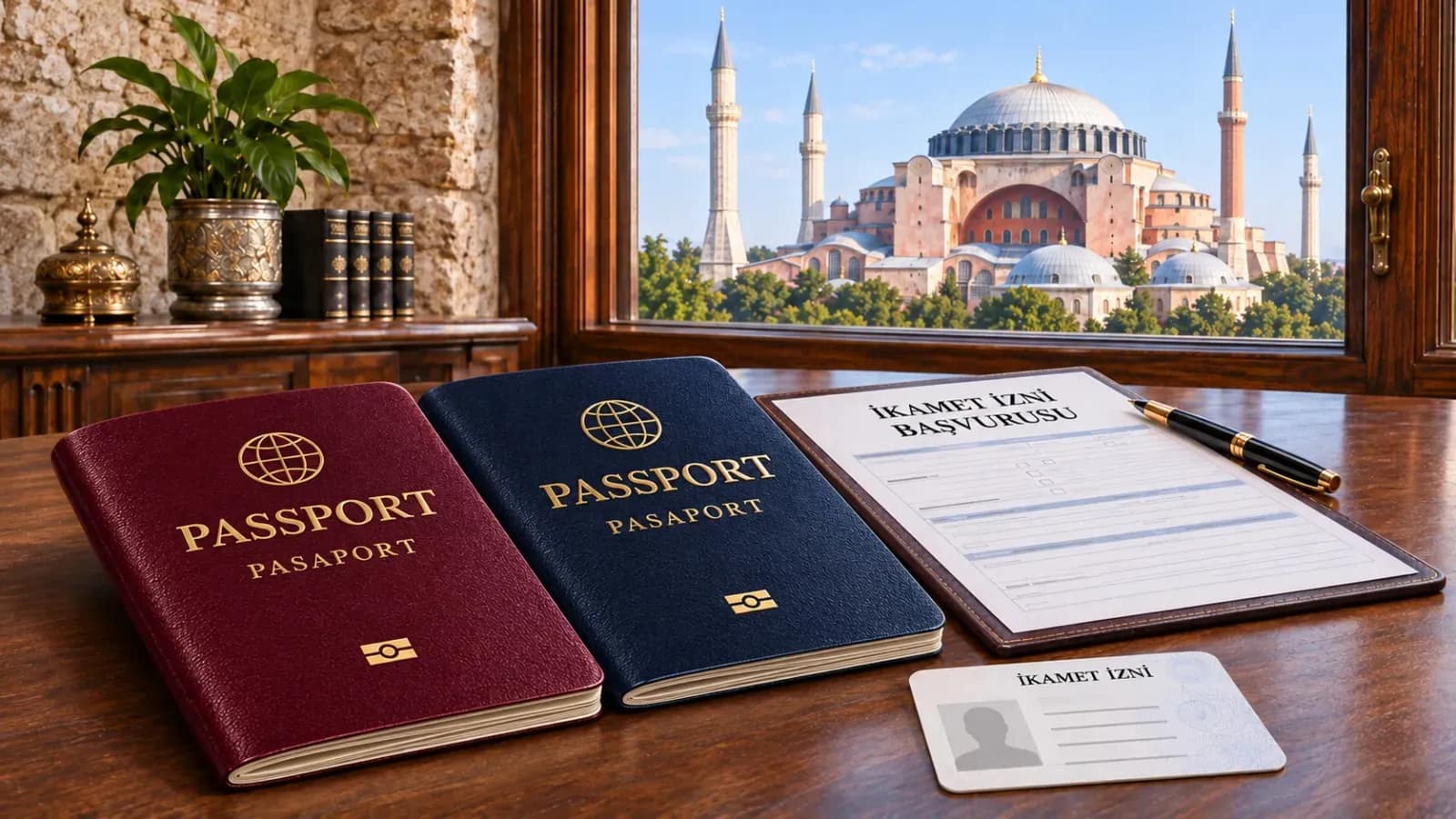
A foreigner who will stay in Türkiye longer than the period granted by a visa or visa exemption, or longer than ninety days, must obtain a residence permit (Law on Foreigners and International Protection, YUKK art. 19). The types of residence permit are short-term, family, student, long-term, humanitarian and victim of human trafficking permits (YUKK art. 30).
As a rule, the application is made to the consulate in the country of which the foreigner is a citizen or where they are legally present (YUKK art. 21). Applying from within Türkiye is an exception and is possible in the cases listed in YUKK art. 22.
Short-term, family and long-term permits
- Short-term permit. It may be granted on grounds such as owning real property, commercial connections or setting up a business, tourism or medical treatment, and is, as a rule, valid for a maximum of two years each time (YUKK art. 31). The Ministry determines the characteristics and value of the real property; since this condition can change, its status at the date of application is checked.
- Family permit. It may be granted to the foreign spouse of a Turkish citizen, a person covered by art. 28 of Law No. 5901, a foreigner with a residence permit, a refugee or a holder of subsidiary protection status, and to their or their spouse's foreign minor or dependent child. It may not exceed three years each time, and its duration may not exceed that of the sponsor's residence permit (YUKK art. 34).
- Long-term permit. It is granted by the governorate, with the Ministry's approval, to foreigners who have stayed on a residence permit for at least eight uninterrupted years and meet the other conditions (YUKK art. 42 and YUKK art. 43).
Extension, refusal and notification
An extension application is made to the governorate from sixty days before the permit expires and, in any event, before the period ends. With the document given to the applicant, the person may stay in Türkiye until a decision is made, even if the permit period has expired (YUKK art. 24).
The conditions ceasing to apply, use of the permit for a purpose other than that for which it was granted, or the existence of a deportation or entry ban decision leads to refusal, cancellation or non-extension of a short-term permit (YUKK art. 33). These decisions are served on the foreigner, their legal representative or their lawyer, and the notification also states how rights of objection are to be exercised (YUKK art. 25).
Work permit
A valid work permit replaces a residence permit (YUKK art. 27). The reverse does not apply: except for refugee and subsidiary protection status, holding a residence permit does not give the right to work (International Labour Force Law, UİK art. 12).
The application is made directly to the Ministry within Türkiye, and to the embassy or consulate general abroad. Applications with complete information and documents are assessed within thirty days, and a postponement given for missing documents may not, as a rule, exceed thirty days. An extension is applied for from sixty days before the period ends and, in any event, before it expires; later applications are refused (UİK art. 7).
On a first application, a permit is granted for a maximum of one year (UİK art. 10). The grounds for refusal are listed in UİK art. 9. An objection may be made to the Ministry against decisions within thirty days of service, and if the objection is refused, recourse to the administrative courts is available (UİK art. 21).
Deportation: seven-day period for bringing an action
A deportation decision is served, with its reasons, on the foreigner, their legal representative or their lawyer. An application against the decision may be made to the administrative court within seven days of service. Unless the foreigner consents, they are not deported during the period for bringing an action and until the proceedings are concluded. The court's decision is final (YUKK art. 53).
Those who are deported are banned from entering Türkiye. The ban is for a maximum of five years and, where there is a serious threat to public order or security, may be increased by a maximum of a further ten years (YUKK art. 9).
If a foreigner needs a certificate of inheritance (veraset ilamı), it cannot be obtained from a notary (Notaries Law, NK art. 71/B). The document list is on the preparing for the consultation page.
Sources (20) · Last reviewed: October 31, 2026
- Law on Foreigners and International Protection art. 9
- Law on Foreigners and International Protection art. 19
- Law on Foreigners and International Protection art. 21
- Law on Foreigners and International Protection art. 22
- Law on Foreigners and International Protection art. 24
- Law on Foreigners and International Protection art. 25
- Law on Foreigners and International Protection art. 27
- Law on Foreigners and International Protection art. 30
- Law on Foreigners and International Protection art. 31
- Law on Foreigners and International Protection art. 33
- Law on Foreigners and International Protection art. 34
- Law on Foreigners and International Protection art. 42
- Law on Foreigners and International Protection art. 43
- Law on Foreigners and International Protection art. 53
- International Labour Force Law art. 7
- International Labour Force Law art. 9
- International Labour Force Law art. 10
- International Labour Force Law art. 12
- International Labour Force Law art. 21
- Notaries Law art. 71/B