
Practice areas
Mediation
In which disputes pre-action mediation is mandatory, how the process works, the consequence of not attending the meeting, and the settlement document.
Last reviewed: October 31, 2026
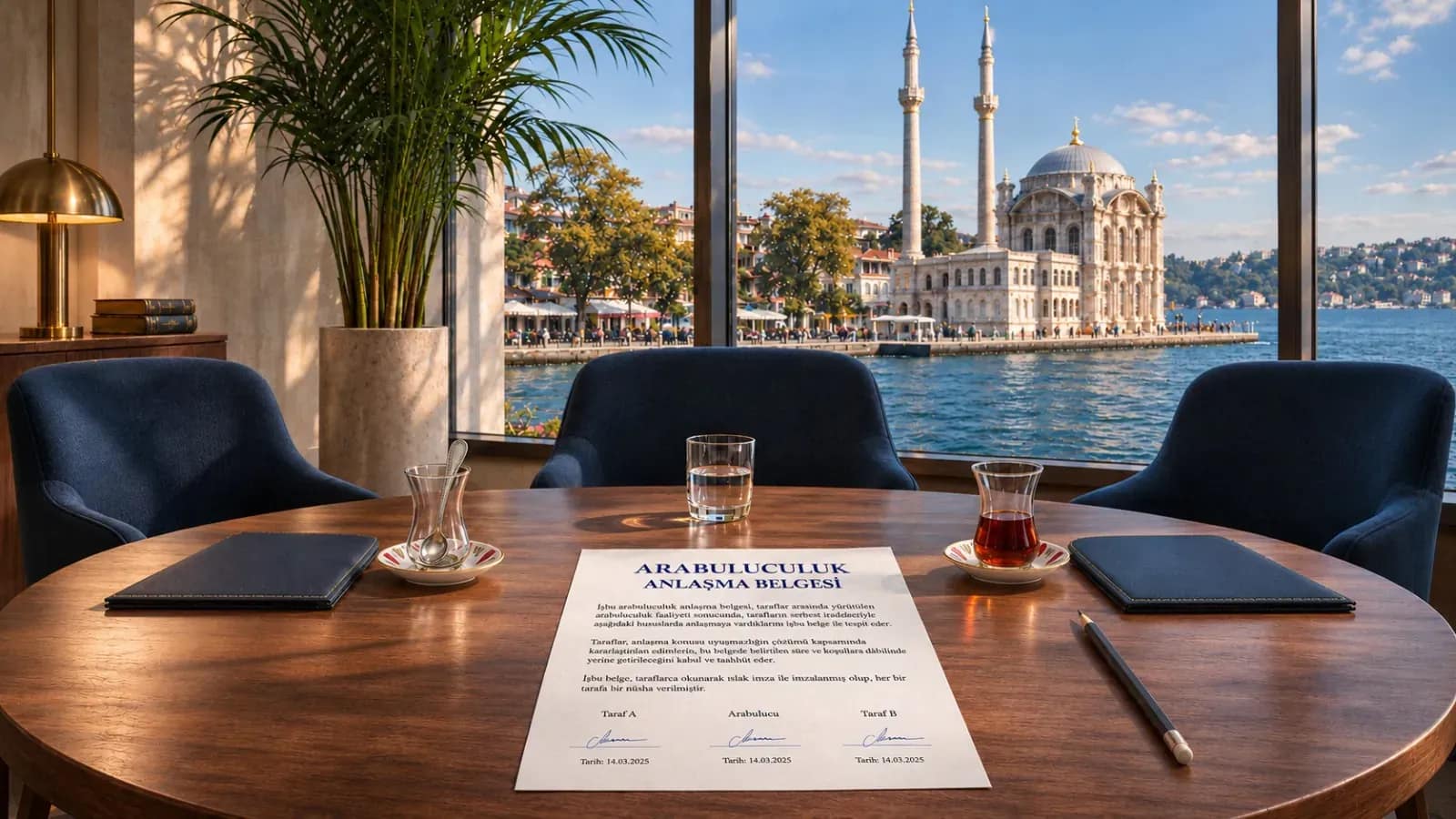
A mediator does not make a decision and cannot carry out acts a judge may perform (Law on Mediation in Civil Disputes, HUAK art. 15). In private law disputes over which the parties may freely dispose, the parties themselves seek the solution. Disputes involving allegations of domestic violence are not suitable for mediation (HUAK art. 1).
This page explains preparing for and taking part in mediation as the lawyer for one party. A mediator must be impartial and cannot later act as the lawyer for one of the parties in a dispute where they served in that capacity (HUAK art. 9).
Disputes where mediation is a condition for the action
- Commercial actions. Debt, compensation, annulment of objection, negative declaratory and recovery actions concerning a sum of money (Turkish Commercial Code, TTK art. 5/A).
- Tenancy. Disputes arising from the tenancy relationship, except for the provisions on eviction through enforcement without a judgment (HUAK art. 18/B).
- Division and partition of co-owned property. For movable and immovable property (HUAK art. 18/B).
- Condominium ownership and neighbour rights. Disputes arising from the Condominium Law and from neighbour rights (HUAK art. 18/B).
- Employment and consumer matters. The scope is determined by their own laws (Labour Courts Law, İMK art. 3; Law on Consumer Protection, TKHK art. 73/A).
The provisions on tenancy, division, condominium ownership and neighbour rights, and the extension of scope in commercial actions, were introduced by Law No. 7445 and entered into force on 1 September 2023. In a dispute outside the scope too, the parties may go to a mediator voluntarily (HUAK art. 3).
Office, mediator and time limit
The application is made to the mediation office at the place of the court with jurisdiction according to the subject of the dispute. The office appoints a mediator from the list; if the parties agree on a name on the list, that person is appointed. The applicant gives their own contact details and those they have for the opposing party (HUAK art. 18/A).
The mediator concludes the application within three weeks of the date of appointment, extending this by a maximum of one week where necessary. In commercial actions, this period is six weeks with a maximum two-week extension (TTK art. 5/A).
The parties may attend in person, or through their legal representatives or lawyers (HUAK art. 15). A representative's authority for mediation must be expressly written in the power of attorney (Code of Civil Procedure, HMK art. 74).
What is said in the talks
Unless the parties agree otherwise, the process is confidential (HUAK art. 4). Proposals and admissions made in the talks cannot be used as evidence in an action (HUAK art. 5). Evidence that can be obtained by another route does not, however, become unusable merely because it was presented in mediation.
Not attending the first meeting
A party who does not attend the first meeting without a valid excuse is, even if successful in the action, held liable for half of the litigation costs the opposing party is obliged to pay. Half of the attorney's fee determined under the minimum tariff is awarded in that party's favour (HUAK art. 18/A).
From the application to the office until the final report, limitation is suspended and forfeiture periods do not run. This provision does not revive a period that expired before the application. The claimant must attach the final report to the petition; an action brought without any application is dismissed on procedural grounds (HUAK art. 18/A).
Settlement document
The document is signed by the parties and the mediator, and an enforceability annotation may be obtained. A document signed together by the parties and their lawyers and the mediator counts as a document having the status of a court judgment without requiring an annotation, except where the law makes the annotation mandatory. In commercial disputes, the signatures of the lawyers and the mediator are sufficient for this (HUAK art. 18). No action can later be brought on the matters agreed, and the scope of the text is written accordingly.
In disputes within the scope of HUAK art. 18/B, the annotation is mandatory. For documents concerning real property, the court also checks whether the statutory restrictions have been complied with.
Before sitting down at the table
The legal framework of the dispute, the possible outcome of an action, the cost items and the points the party cannot give up are assessed. As well as the figure in the offer, the payment schedule, security and scope are also discussed. Who bears the mediation fee varies according to whether an agreement is reached and the length of the talks (HUAK art. 18/A).
Sources (14) · Last reviewed: October 31, 2026
- Law on Mediation in Civil Disputes art. 1
- Law on Mediation in Civil Disputes art. 3
- Law on Mediation in Civil Disputes art. 4
- Law on Mediation in Civil Disputes art. 5
- Law on Mediation in Civil Disputes art. 9
- Law on Mediation in Civil Disputes art. 15
- Law on Mediation in Civil Disputes art. 18
- Law on Mediation in Civil Disputes art. 18/A
- Law on Mediation in Civil Disputes art. 18/B
- Turkish Commercial Code art. 5/A
- Labour Courts Law art. 3
- Law on Consumer Protection art. 73/A
- Law No. 7445 art. 43 (entry into force)
- Code of Civil Procedure art. 74