
Which matter requires which authority?
Power of attorney information
General explanations of situations requiring a notary, a consulate or special authority.
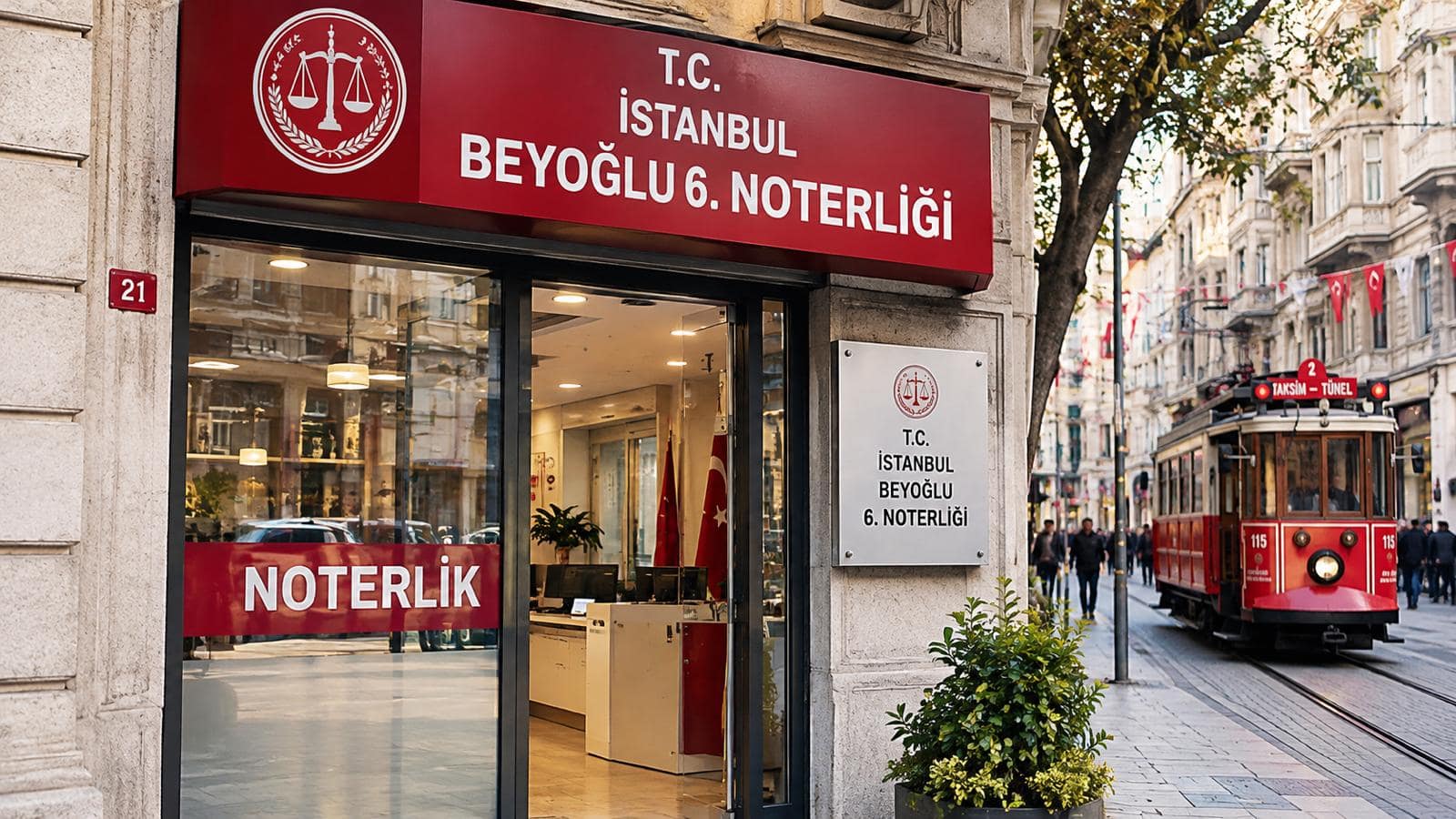
A lawyer must place in the file the original of the power of attorney certified or drawn up by a notary, or a copy certified by the lawyer, in the actions and matters the lawyer brings or pursues (Code of Civil Procedure, HMK art. 76). Which powers are to be written into the text depends on the type of matter; clarify this with the office before having it drawn up.
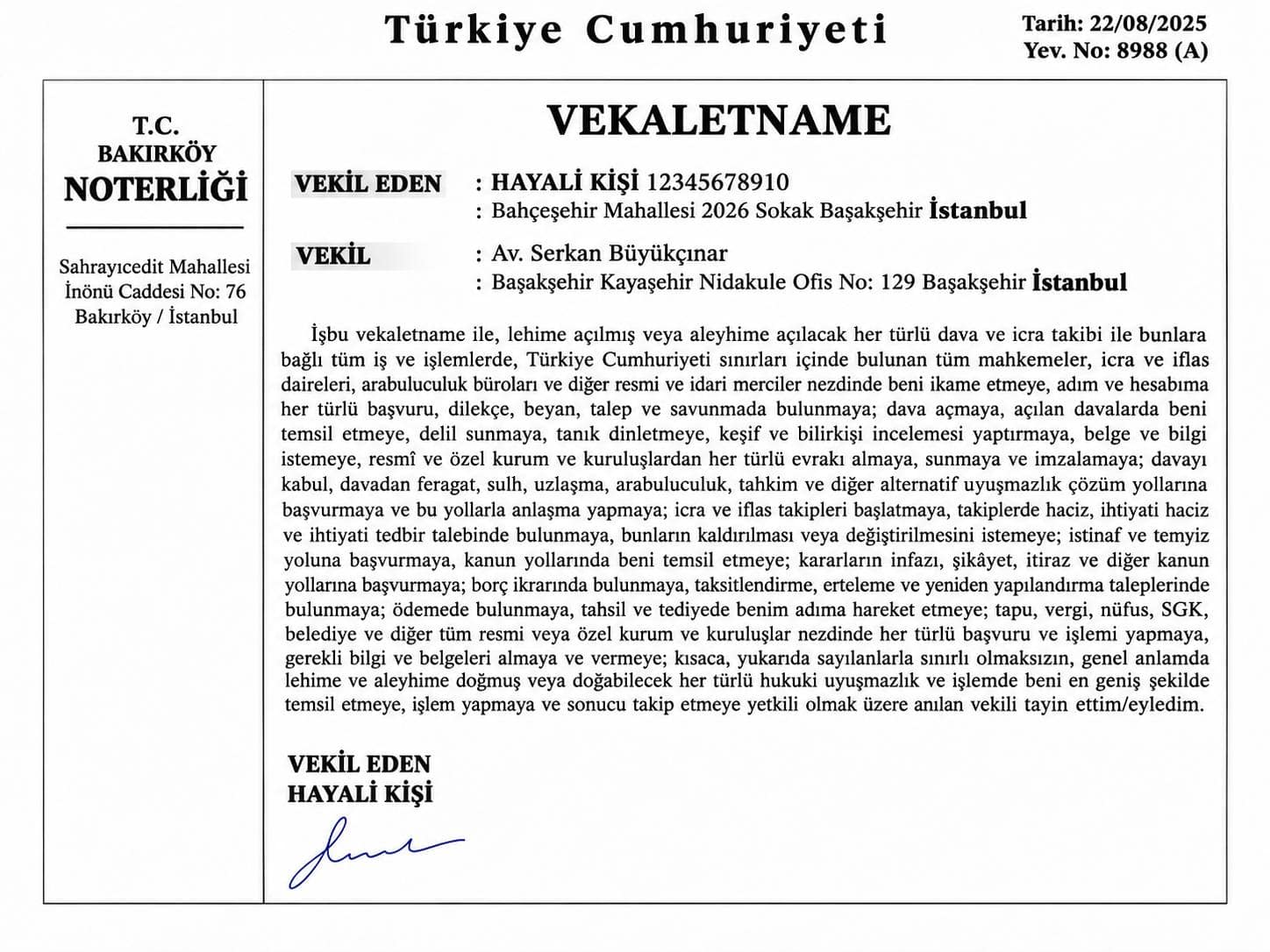
At the notary
A lawyer who does not submit a power of attorney cannot, as a rule, bring an action or take steps in the proceedings. Where delay could cause harm, the court may give permission by setting a peremptory time limit (HMK art. 77). A lawyer may use a true copy of the power of attorney they hold (Attorneyship Law, AvK art. 56).
The notary is obliged to establish the identity, address and true wishes of the person having the act carried out (Notaries Law, NK art. 72), and an identity document is required. For a person who does not know Turkish, a sworn translator is present (NK art. 74). Powers of attorney requiring a transaction at the land registry (tapu) are drawn up in the form of a notarial deed (NK art. 89).
Abroad
In foreign countries, notarial work is carried out by consuls and the act is performed in the consulate building (NK art. 191 and NK art. 192). A person living abroad may grant the power of attorney at the Turkish consulate in the country where they are. For appointments and the documents required, apply to the relevant consulate. If a draft of the text is obtained from the office before going, the act will not have to be repeated because of missing authority.
If the act is to be carried out before a foreign authority, additional steps may be needed. For official documents prepared by the authorities of a foreign state to have that status in Türkiye, they must be certified by the competent authority of the state that issued them or by the relevant Turkish consular authority, subject to international conventions (HMK art. 224). In countries within the scope of the Hague Convention, to which Türkiye is a party, this certification may be made by apostille. A text in a foreign language may also need to be translated into Turkish and the translation certified (NK art. 60).
Powers that must be written expressly
A power of attorney for litigation covers, except for matters where the law requires special authority, the steps needed to pursue the action until the judgment becomes final (HMK art. 73). Unless expressly authorised, the representative may not do the following (HMK art. 74):
- Settle, accept the claim, waive the action or legal remedies, or release the opposing party
- Challenge a judge, or amend the entire claim
- Propose an oath, or accept, return or refuse an oath
- Appoint another representative, or lift an attachment
- Request the client's bankruptcy, propose a concordat or restructuring, or consent to these
- Enter into an arbitration or arbitrator agreement, or resort to alternative dispute resolution
- Seek a retrial, or bring a compensation action against the State on account of the acts of judges
- Bring and pursue actions concerning strictly personal rights, unless it is stated which of these the authority covers
Applying to mediation and signing an agreement there fall within this list. If special authority has not been written in, a new power of attorney may be needed, which means additional time and expense for a person abroad.
Who is named as representative
The lawyer details to be written in the power of attorney are notified by the office after the matter is accepted.
A power of attorney does not by itself determine the scope of the matter or the fee. You do not need to have one drawn up before the matter is accepted. Revocation of a power of attorney or the representative's resignation is subject to a separate procedure.
Briefly describe your matter before the consultation
Leave your name, telephone number and subject. If you prefer, send them via WhatsApp in writing or by voice.